
 2141
Big 5 in South America
2141
Big 5 in South America
2154 A Grand Private Space Colony at Earth-Moon L5
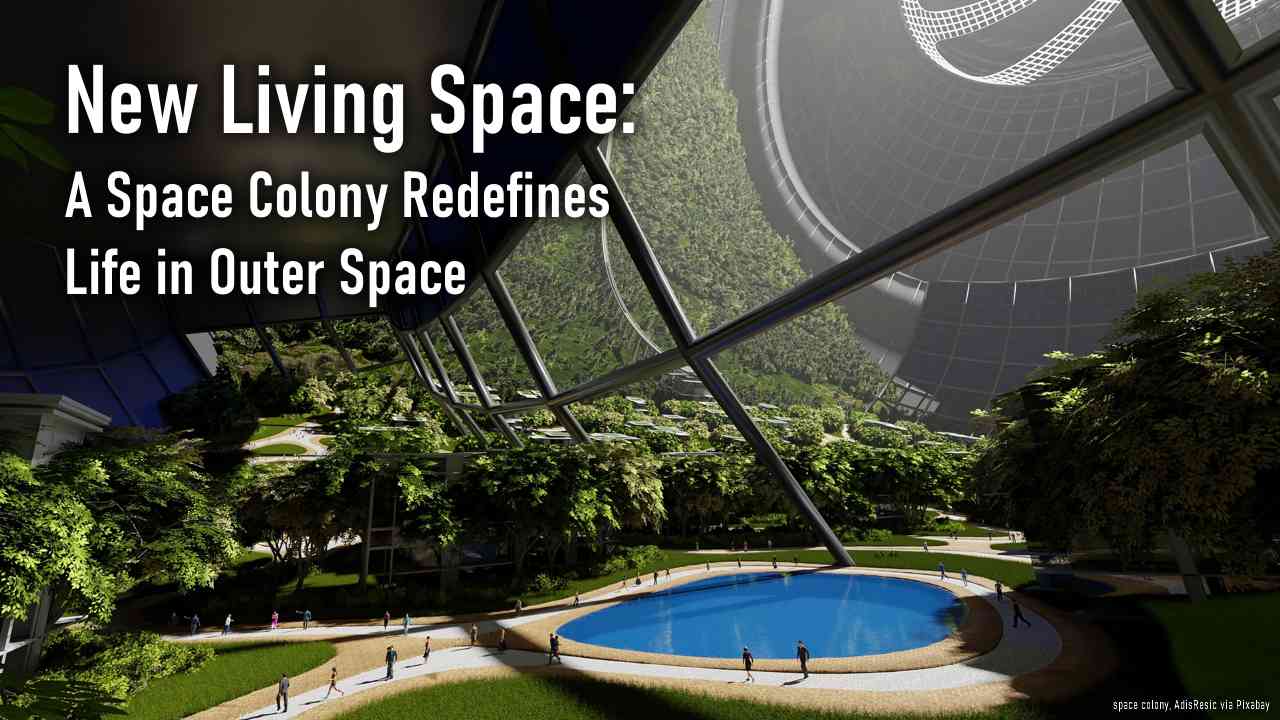
The year 2154 sees the inauguration of Gemini, an ambitious private space colony at the Earth-Moon Lagrange point L5. Gemini is no ordinary space station. It's a vast O'Neill double-cylinder, a space habitat concept that seemed like a distant dream a century ago.
The conception of Gemini dates back to 2129, when a consortium of private space corporations from around the globe, including names such as Orbital Dynamics (UK), the Yakutsk KosmosTek, Astrosphäre (Germany), Manchurian Tian Gong Industries, and the Indian Antariksh Enterprises, proposed the idea. The surge in lunar mining operations around this time provided ample construction materials, making the project economically viable. Lunar iron, titanium, aluminum, silicon, and carbon, along with trace elements, rare earths, and essential volatiles like water, oxygen, and nitrogen, formed the building blocks of Gemini.
The design of Gemini is a marvel in itself. It comprises two gigantic cylinders, each five kilometers in length and one kilometer in diameter. Reusable launch systems, a staple for over a century, combined with robotics, automation, zero-gravity 3D printing, and engineering AI, allowed the creation of this megastructure. These cylinders rotate to generate a Mars-level artificial gravity, a key aspect making long-term habitation feasible.
Inside Gemini, the terraforming process mimicked Earth's environment, layering the lunar rock above the support structure to serve as a radiation shield. Inside this rocky shell lay a thin layer of soil, implanted with life-supporting minerals, plant seeds, and living organisms, to create a lush, green landscape that would be habitable and carry life, an oasis in outer space.
The terraforming process was an extraordinary engineering feat, and it took many years of careful planning and execution. To create a biologically active environment inside Gemini, a diverse array of plant species, including genetically modified variants, were introduced to form a balanced ecosystem. These plants were chosen for their aesthetic appeal and above all for their ability to adapt to the unique conditions inside the cylinders, where they contribute to oxygen production and waste recycling. Additionally, several small water bodies were introduced to enhance humidity control and provide habitats for a variety of aquatic species, adding another layer to the complexity and richness of the life support system inside Gemini.
After its inauguration, Gemini rapidly grows into the cultural and economic heart of the outer Earth orbit (XEO). Its strategic location at L5, a point of gravitational equilibrium between Earth and the moon, makes it energetically advantageous for traffic between high Earth orbit, the moon, Mars, and the Sun-Earth L1 point. Gemini's position bolsters its economic significance as a trading post and a waypoint for spacecraft traveling further into the Sol System.
Gemini's economy primarily thrives on research and manufacturing, and companies opt for Gemini over other space stations for its natural living environment, a stark contrast to the confined spaces of traditional space stations. The research and manufacturing activities at Gemini span a diverse range of fields. Biotechnology research on protein crystals yields advances in medical treatments, including novel therapies for neurodegenerative diseases. Manufacturing in space also sees a surge at Gemini. In its microgravity environment, companies are able to produce high-quality, crystal-clear optical fiber using a process more efficient in space than on Earth. By 2160, some of the advanced components of next-generation spacecraft are being assembled and launched directly from Gemini, saving costs and resources, and further boosting the station's economic viability.
The population of Gemini grows to more than 10,000 within six years of the inauguration. Its inhabitants come from many countries and cultures. The society is very international, united in the notion that Gemini is a big step towards making outer space a living space for humans and that they are at the frontier of human development in the Sol System. The Gemini Festival of Lights becomes an annual event, marking the station's completion of a solar orbit. It illuminates the interior of Gemini with a dazzling array of colors and patterns, mirroring the diversity and unity of the station's international community. Moreover, it swiftly transforms into a prominent tourist attraction, drawing visitors from other space habitats, lunar settlements, and even Earth itself. Artists from across the globe participate in this festival, showcasing their work in a stunning light and sound display that spans the entire interior of the cylinders, reflecting off the water bodies and vegetation, and creating a mesmerizing spectacle that leaves audiences in awe. For many visitors, the journey to Gemini to witness this festival becomes a once-in-a-lifetime adventure.
In the years following its establishment, Gemini serves as a prototype for other similar station complexes comprising two or more cylinders. The experience gained during construction, operation, and station management proves invaluable for building even larger habitats in the decades after Gemini. Gemini's success paves the way for humanity to become a truly space-faring civilization.
Other Space Flight
2135 Cooling the Earth
2154 New Living Space
2155 Asteroid Mining
2158 Space Patrol
2179 Private Asteroid Base
2182 End of Venus Terraforming
2187 Moon Deportations
2191 100,000 in Space
2222 Space Piracy
2234 Orbit's End
2247 Quantum Leap
2307 Fractal Drive
2333 Metric Impulse Drive
2501 Extraplanetary Exploration
2648 Adventurous Journey
Latest Articles
2852 Sharks in Orbit
2179 Private Asteroid Base
2205 Corporate Cosmos
2234 Orbit's End
2248 Gemini Disaster
2284 Great Separation
2326 No Interplanetary War
2333 Metric Impulse Drive
2337 Lunar Takeover
2366 Orbital Economics
3308 Supernova
3361 First Humanity
2321 Earth Isolation
2291 Illegal Research
2303 Space Trader Coup
2312 Alien Spaceship
2158 Space Patrol
2197 Lunar Revolt
2222 Space Piracy
2231 United Planets
Absolute Highlights
(20 of 63)
2115 Life-Themes
2158 Space Patrol
2179 Private Asteroid Base
2205 Corporate Cosmos
2222 Space Piracy
2231 United Planets
2291 Illegal Research
2471 War on Venus
2501 Extraplanetary Exploration
2574 Aliens Demand Tribute
2630 A Conspiracy is Exposed
2668 Ultra Metals
2786 Unimpeded Development
2915 FTL Capable Railgun
3042 Galaxies are Intelligent Living Beings
3116 Rebellion on the Moon
3131 Robots and Dragons
3296 Dragon Legends
3308 Supernova
3365 A Quantum Leap
Printed Book
Galactic Developments as Buch and eBook (in German).
 2155
Asteroid Mining
2155
Asteroid Mining