
 2182
End of Venus Terraforming
2182
End of Venus Terraforming
2187 First Transfer of Prisoners to the Moon
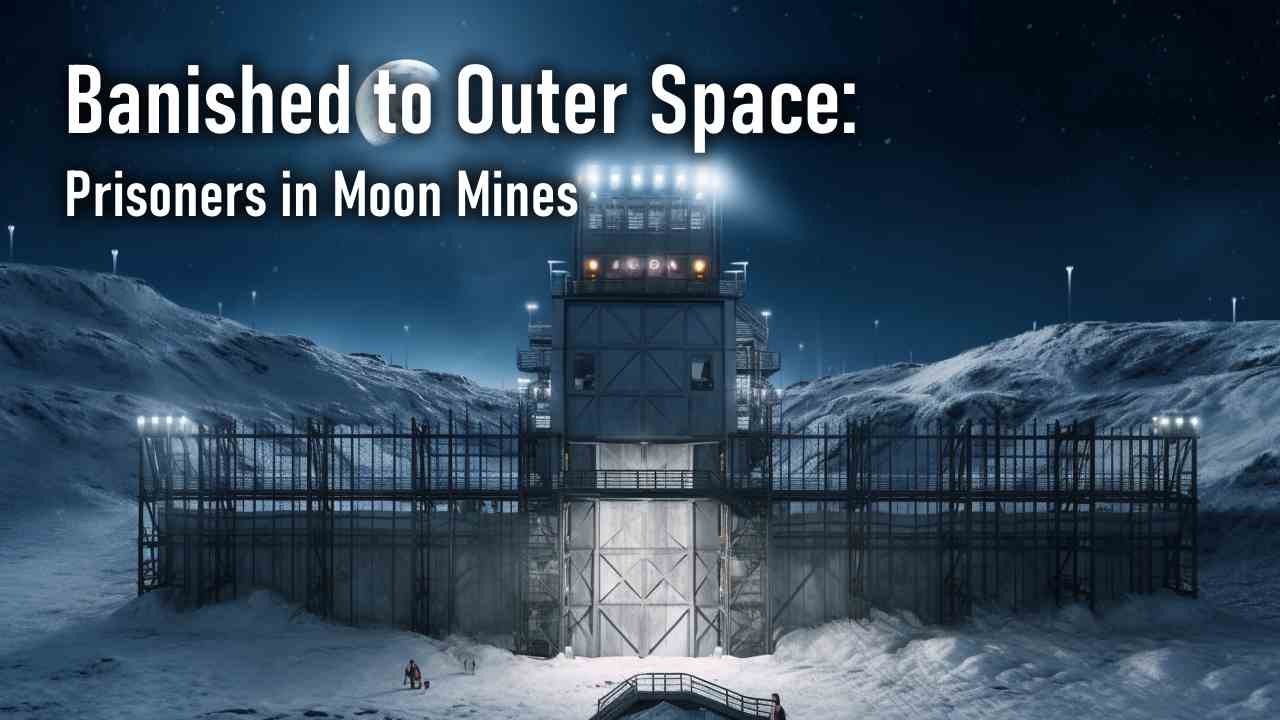
A drastic solution to escalating labor issues in space industries is conceived. Governments and corporations around the world decide to deport long-term prisoners to the Moon, an initiative born out of desperation and controversial from the outset.
Increasing asteroid mining accidents, soaring death tolls among miners, and a dwindling workforce begin to gnaw at the financial viability of space industries. From 2167 onward, recruiting sufficient well-trained engineers for hazardous asteroid mining jobs proves increasingly difficult.
As early as 2172, first pilot programs offer prisoners reduced sentences in return for their services in asteroid mining. Despite fierce criticism from human rights groups, these programs are initially economically successful. This success propels the initiative forward, and by 2182, long-term prisoners are offered the option to serve their sentences on the Moon working in ice mines and living in normal quarters instead of staying in prison cells. The first lunar deportations in 2187 are a turning point. The forced addition of prisoners to the lunar population sparks new difficulties, social tensions, and socioeconomic shifts. The utilization of prisoners as a low-cost workforce in the perilous domain of asteroid mining shows the profound influence of commercial interests on public policy.
For cost reasons, working conditions in orbital resource extraction are poor. The frequency of fatal accidents on the Moon and in the asteroids shows Earth's indifference towards the safety of space workers. Governments and corporations often neglect worker safety in the pursuit of profit, with prisoner labor programs exacerbating the risk. Besides countless individual accidents, there is a series of major disasters between 2187 and 2215:
A Scandinavian initiative to employ prisoners in asteroid mining ends in disaster due to a flagrant violation of safety protocols. The explosion results in three fatalities. In another incident, Brazil's new lunar ice mining base "Yara" suffers a structural collapse, killing 5 workers and injuring 15. Australian spacecraft "Eureka" crash-lands on the lunar surface during a prisoner transfer. Eight prisoners and three crew members die in the accident. A shockwave in a rubble pile asteroid sets gigatons of rocks in motion, causing severe damage to the "Yue Liang" with 13 casualties. A Kenyan penal base on the Moon is engulfed in a massive fire that kills 15 prisoners and two staff members. The Mexican "Luna Libre" Rehabilitation Base suffers a decompression accident, killing 10 prisoners and injuring 13 others. 2209: The fatal lunar base blowout with 45 casualties: an equipment malfunction turns catastrophic when neglected maintenance prevents emergency doors from closing. The Nigerian prospecting and mining vessel "Akwụkwọ Nsọ" suffers a major failure during an asteroid mining operation. The living quarters module accidentally detaches and collides with an asteroid, resulting in 12 victims. The list goes on.
Following the tragic lunar base incident in 2209 with so many casualties, human rights campaigns intensify their efforts. The catastrophe sparks new debates about labor rights and ethical business practices. Human rights organizations argue that the harsh conditions in space and the high mortality rates are akin to a death sentence for these prisoners. The fight against prisoner deportations and a push for improved safety conditions for all space workers gain significant traction. By 2215, these campaigns successfully lobby for an outright ban on prisoner deportations to the Moon.
This ban leaves space companies grappling with a severe labor shortage. As a result, they pivot their strategy towards investing more in their workforce, improving safety protocols, and providing better equipment. The Peace Corps Space Patrol plays a key role by releasing new safety standards, which are subsequently enforced by insurance companies, making adherence to safety regulations an industry-wide imperative.
A slowdown in prospecting and extraction activities due to workforce shortage causes a temporary crisis in the availability of cheap construction materials in orbit. However, this hurdle is overcome as the industry's investment in safety protocols and increased salaries start to attract a larger number of voluntary workers.
The change that began as a human rights issue leads to a qualitative leap in orbital resource extraction. When the space companies finally bring themselves to make work in space safer and more attractive, the availability of raw materials in orbit increases exponentially. The resultant drop in prices sparks an economic boom in the space industry.
Latest Articles
2179 Private Asteroid Base
2205 Corporate Cosmos
2234 Orbit's End
2248 Gemini Disaster
2284 Great Separation
2326 No Interplanetary War
2333 Metric Impulse Drive
2337 Lunar Takeover
2366 Orbital Economics
2852 Sharks in Orbit
3308 Supernova
3361 First Humanity
2321 Earth Isolation
2291 Illegal Research
2303 Space Trader Coup
2312 Alien Spaceship
2158 Space Patrol
2197 Lunar Revolt
2222 Space Piracy
2231 United Planets
Absolute Highlights
(20 of 63)
2158 Space Patrol
2168 Spaceship Udyama
2234 Orbit's End
2501 Extraplanetary Exploration
2532 The Outer System Wipe
2535 An Interstellar Tragedy
2557 Heavy Losses at Vladivostok
2668 Ultra Metals
2725 Even machines have a conscience
2794 Prophet of the Galactic Traders
2852 Sharks in Orbit
2915 FTL Capable Railgun
3042 Galaxies are Intelligent Living Beings
3050 Knights of the Royal Guard
3090 Solo Honor
3131 Robots and Dragons
3190 Surprise Attack
3308 Supernova
3361 First Humanity
3365 A Quantum Leap

Printed Book
Galactic Developments as Buch and eBook (in German).
 2191
100,000 in Space
2191
100,000 in Space